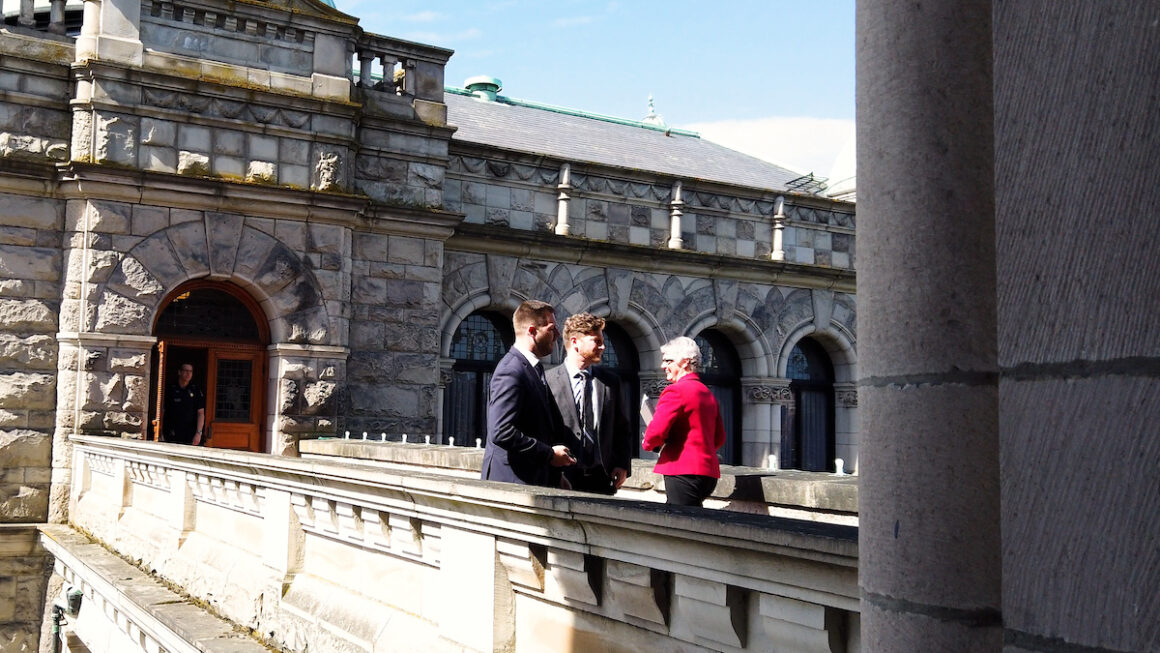
A snap election has been called in BC, with the province heading to the polls on October 24, 2026, roughly two years earlier than required. Premier David Eby and the BC NDP say the election is necessary because the province is facing an existential threat caused by US President Donald Trump’s trade war, and that a new mandate is required, but many others have a different take.
Why is it happening (and so early)?
Is it legal to call an election so soon after the last one? Yes! In Canada’s Westminster-style constitutional monarchy, a premier can request an early dissolution of the legislature, provided the constitutional rules governing the maximum life of the legislature are respected. The lieutenant governor then decides whether to grant the request. So, it was constitutionally appropriate for the Hon. Wendy Cocchia – the King’s representative in BC – to grant Premier Eby’s request to call an early election. But that doesn’t mean it’s a decision without controversy.
Critics argue that Eby is using a public emergency to take advantage of the weakness of the opposition in order to gain a political advantage before a high deficit and slumping poll numbers make re-election more difficult.
Why is the opposition weak? Well, the BC Conservatives – who narrowly missed forming government in the last election – are in serious turmoil. Former leader Kerry-Lynne Findlay resigned after less than four months on the job after several MLAs left the caucus, with some even joining or forming other parties. At least two BC Conservative MLAs have joined the further-right OneBC party. Other MLAs who left caucus to join the upstart CentreBC party have now rejoined the Conservative caucus, though internal divisions remain. And the CentreBC party – a new centrist political party that seemingly seeks to resemble the federal Liberals under Mark Carney – will remain on the ballot, led by former BC Conservative MLA Elenore Sturko. Oh, and the BC Conservatives will be led by an interim leader – Lorne Doerkson – during the election, meaning that the party may choose a new leader to serve as premier after the election, should the Conservatives win.
The result of all of this could be vote splits in key electoral ridings, allowing the NDP to win seats that a united opposition would otherwise win. And the optics of chaos and disunity in the BC Conservative Party could also make voters wary. For all of these reasons, the BC NDP are being accused of opportunism.
Who is running?
The main parties and leaders are:
- BC NDP – David Eby (premier) | Incumbent left-leaning government seeking re-election (comparable to federal NDP)
- BC Conservative Party – Lorne Doerkson (interim leader) | Centre-right party and official opposition after the last election (comparable to Conservative Party of Canada)
- BC Green Party – Emily Lowan (leader) | Left-leaning, third-place party in the legislature after last election (comparable to Green Party of Canada)
- CentreBC – Elenore Sturko (leader) | The leader is the only sitting MLA of the new centrist political party (comparable to Liberal Party of Canada)
- OneBC – Dallas Brodie (interim leader) | Relatively new populist, right-wing political party (comparable to People’s Party of Canada)
Why it matters
In addition to the top-of-mind issues like crime and safety, health care, and affordability, this election is a referendum on how BC should respond to the trade war.
- Should the province protect jobs through public investment and industrial policy?
- Should it expand resource exports and transportation links?
- How should it balance faster economic development with climate commitments and Indigenous rights?
- Does confronting US pressure require stronger provincial leadership or more cooperation with Ottawa?
Why it also matters
It’s also very possible this election will be a referendum on whether this election is harmful to democracy. While an early election is legal and far from unprecedented in Canada, the Westminster system’s unwritten rule is that an election shouldn’t be called when the opposition is without a leader. In fact, calling an election in this circumstance is highly unusual in countries that use our system of governance.
This raises several questions. Should a government use an emergency to ask voters for a mandate before opponents are organized? Does this scenario give voters enough reasonable options from which to make a fair decision on who should govern them for the next four years, especially during a time of crisis? And does the act of calling an election further undermine trust in electoral politics in a time of polarization and misinformation?
The BC election also overlaps awkwardly with municipal elections: local elections are scheduled for October 17, only one week before the provincial vote. This too could create confusion and low voter turnout, further impacting the democratic process in the province.
Want to know more?
Better understand our system of governance in Social Studies Chapter One, ideological debates in BC and Canada in Social Studies Chapter Two, and the issue of democratic decline in Canada at a Crossroads Chapter Five.
Activities by Subject
Social Studies
Theme: How governments work, and when elections happen
Reflection Questions
- What is a snap election?
- Why does Canada allow premiers to request an early election?
- What role does the lieutenant governor play?
- Why might a government want to call an election earlier than required?
- What are the potential advantages and disadvantages of an early election?
- What is the difference between something being constitutionally permitted and something being politically controversial?
- Why might an opposition party’s ability to organize matter to the fairness of an election?
- What responsibilities does a government have when deciding when to ask voters for a new mandate?
- Should there be limits on when governments can call elections? Why or why not?
Activity: Legal ≠ Controversial
Give students four statements:
A. The premier has the constitutional ability to request an early election.
B. The lieutenant governor agrees to the request.
C. The opposition party is poorly organized.
D. Some people argue the timing gives the governing party an advantage.
Students classify each statement as:
Constitutional fact
Political circumstance
Interpretation/opinion
Then ask:
Can something be legal and still generate legitimate democratic debate?
Science
Theme: Trade-offs, climate & systems thinking
Reflection Questions
- How could changes in transportation infrastructure affect environmental systems?
- What environmental consequences could result from expanding resource exports?
- How could a trade war change the environmental costs and benefits of producing goods locally?
- What is a trade-off?
- Can a policy simultaneously produce an economic benefit and an environmental cost?
- Why might climate policy and economic policy sometimes have competing short-term goals?
- What information would scientists need to provide before governments make major infrastructure decisions?
Activity: Follow the Supply Chain
Take this hypothetical BC product:
Lumber → port → ship → United States → consumer
Now change one variable:
The United States imposes a major tariff on the product.
Map the possible effects:
Tariff → Canadian producers → workers → transportation → ports → government response → environment
For every connection, identify:
Direct effect
Indirect effect
Possible effect
Then ask:
Why can changing one part of a system create consequences somewhere completely different?
English
Theme: Political framing & persuasive language
Reflection Questions
- What does the phrase ‘existential threat‘ communicate?
- What is the difference between saying a government is ‘calling an early election‘ and ‘calling a snap election‘?
- How can the same election be framed as a necessary democratic mandate or as a political opportunity?
- What words make an argument sound urgent?
- How can a journalist distinguish between reporting a political claim and endorsing it?
Activity: Change the Frame
Here’s a basic statement:
The government has called an election two years earlier than required.
Write four versions:
Government perspective:
Why might the government say the election is necessary?
Opposition perspective:
Why might opponents criticize the timing?
Neutral news report:
How could a journalist describe what happened without adopting either interpretation?
Then ask:
Which words changed the emotional impact of the story?
Visual Storytelling/Art
Theme: Political identity & visual storytelling
Reflection Questions
- What visual symbols represent BC?
- How might different communities visualize the trade war differently?
- How could an artist represent economic uncertainty?
- How might the same political decision look from the perspective of a worker, business owner, Indigenous community, environmentalist or young person?
- Can art communicate political disagreement without choosing a side?
Activity: One Election, Five Posters
Create five conceptual campaign posters for the same fictional election, each emphasizing a different issue:
Poster 1: Economic security
Poster 2: Environment
Poster 3: Healthcare
Poster 4: Indigenous rights
Poster 5: Democratic participation
*Don’t use real parties or politicians.
Then ask:
How does changing the issue you emphasize change the story you’re telling about the election?
Careers
Theme: Elections, trade & the BC economy
Reflection Questions
- How could a trade war affect different occupations differently?
- Which BC industries are particularly connected to international trade?
- Why might transportation and infrastructure decisions affect employment?
- What careers help governments respond to economic crises?
- What skills are needed when governments, businesses, Indigenous communities and workers have competing interests?
- How could political uncertainty affect business decisions?
Activity: Your Job During a Trade War
Select one occupation:
- Logger
- Truck driver
- Port worker
- Farmer
- Software developer
- Nurse
- Engineer
- Construction worker
- Small-business owner
- Environmental consultant
- Economist
- Indigenous relations specialist
- International trade lawyer
- Journalist
Then:
A major US tariff has just been announced. What happens to your work?
Identify:
One potential risk
One potential opportunity
One question they would ask government
One other profession they would need to work with
Then compare the results.
The takeaway:
An economic policy rarely affects everyone in the same way.
Cross Curricular Activity
Here’s a fictional scenario:
A government has two years remaining in its normal term. A major international crisis has developed. The government argues that it needs a new mandate to respond. The opposition is divided and does not yet have a permanent leader.
Students form a Democratic Decision Committee.
They must establish five criteria that should be considered before an early election is called.
Possible categories:
Constitutional: Is it legally permitted?
Democratic: Do voters have meaningful choices?
Practical: Can parties reasonably organize?
Crisis response: Does the situation genuinely require a new mandate?
Public interest: Is there a compelling reason to interrupt the normal electoral cycle?
The important part:
Students create the criteria before applying them to the scenario.