
On October 19th, Albertans will vote on 10 referendum questions about immigration, provincial powers, constitutional change, and, yes, Alberta’s future in Canada. The most closely watched question does not explicitly ask Alberta to leave Canada. Instead, it asks whether the Alberta government should begin the constitutional process required to hold a later, binding referendum on separation. Even so, this referendum is a critical moment in our nation’s history. Time to fully understand how we got here and what’s at stake. Let’s get into it.
How did we get here?
The referendum, in many ways, is the byproduct of long-running disputes between Alberta and the federal government. Many Albertans believe Ottawa has limited the province’s ability to develop and sell its natural resources, treated the West unfairly, and crafted national policies that favour Central Canada.
Supporters describe the referendum as a way for Albertans to demand more control or send a message to Ottawa. Critics argue that the Alberta government is combining several controversial issues on one ballot to strengthen its political position, creating a national unity crisis at a time when the country needs to be focused on the threats from the south.
The first nine questions were announced by Premier Danielle Smith’s government in February 2026. A tenth question on beginning the legal process toward a possible separation referendum was added later, after separatist pressure and competing petitions increased.
A short history of western alienation
1905: Provincehood without resource control
Alberta and Saskatchewan became provinces in 1905, but unlike the original eastern provinces, they did not initially control their public lands and natural resources. Ottawa retained that control, including rights connected to lands, minerals, and royalties. Alberta gained control over its public lands and natural resources in 1930 through the Natural Resources Transfer Agreement.
This history helped create the belief that the West was treated as a colony or resource supplier rather than as an equal partner in Confederation. Even after 1930, Ottawa retained authority over areas such as interprovincial and international trade, so disagreements over energy policy did not disappear.
1980: The National Energy Program
Prime Minister Pierre Trudeau’s Liberal government introduced the National Energy Program, or NEP. It aimed to secure Canadian energy supplies, increase Canadian ownership of the petroleum industry, and give the federal government a larger share of energy revenues.
Alberta’s government, led by Premier Peter Lougheed, saw the NEP as an intrusion into provincial jurisdiction and as a policy that transferred wealth away from Alberta. Oil prices fell during the early 1980s, the Alberta economy suffered, and resentment toward Ottawa intensified. The NEP remains one of the most powerful symbols of western alienation.
2015: Renewed federal–Alberta tensions
The Liberal federal government under Prime Minister Justin Trudeau introduced or supported policies that many Alberta leaders and oil-industry supporters opposed. These included carbon pricing, environmental assessment changes, restrictions affecting tanker traffic, and the federal Impact Assessment Act. The federal government argued that these measures addressed climate change and protected the environment while preserving a role for responsible resource development. However, many Alberta critics viewed the measures as cumulative barriers to pipelines, oil exports, and investment – deepening resentment and sowing the seeds for the current separatist movement.
What is on the ballot?
While the 10th question is drawing most of the attention, there are nine other important questions. Questions 1 through 9 are yes-or-no questions; Question 10 offers two choices.
Questions 1 to 5: Immigration
These questions ask about matters such as:
- Giving Alberta more control over immigration levels.
- Reducing immigration to what the province describes as sustainable levels.
- Prioritizing economic migrants and Albertans for employment.
- Limiting free services for some temporary residents.
- Requiring proof of citizenship when voting.
Questions 6 to 9: Constitutional and jurisdictional changes
These questions ask whether Alberta should work with other provinces to seek changes to the Canadian Constitution, including:
- Allowing provincial governments, rather than Ottawa, to appoint judges to Alberta’s Court of King’s Bench and Court of Appeal.
- Abolishing the unelected federal Senate.
- Allowing provinces to opt out of federal programs in areas such as health care, education, and social services while keeping the associated federal funding.
- Giving provincial laws priority over federal laws in some areas of shared or provincial jurisdiction when the two conflict.
Question 10: Separation process
The question asks:
Should Alberta remain a province of Canada, or should the Government of Alberta commence the legal process required under the Canadian Constitution to hold a binding provincial referendum on whether or not Alberta should separate from Canada?
As mentioned, a vote for the second option would not make Alberta independent. It would begin a process that could lead to another referendum asking whether Alberta should actually leave Canada.
Indeed, for most of the questions, a yes vote would direct the government to pursue a position or negotiate with other governments; it would not automatically change the Constitution.
How has Premier Danielle Smith handled the referendum?
Danielle Smith became premier after winning the United Conservative Party leadership in 2022. She won only after six rounds of preferential voting, with the party divided between traditional conservatives and a more populist wing that wanted stronger provincial autonomy and confrontation with Ottawa.
As a result, Premier Smith’s position on the referendum has developed under pressure from competing parts of Alberta’s conservative movement. Many UCP supporters want her to confront Ottawa over energy, immigration, and provincial authority but do not necessarily support independence. Others, including activists in the Alberta Prosperity Project and Stay Free Alberta movement, argue that sovereignty within Canada is no longer enough and have pushed for a direct separation vote. A third group sees a referendum mainly as leverage: it could pressure the federal government without necessarily leading to Alberta leaving Canada.
To appease UCP activists, Smith’s government controversially lowered the signature threshold for citizen-led referendum petitions, paving the way for the separatist petition. Even more controversially, Premier Smith and her government did not put the successful anti-separation Forever Canadian petition directly on the October ballot. Instead, a pro-independence petition – led by a UCP constituency-association president – was allowed to proceed. Even when the courts struck down the Alberta Prosperity Project petition because First Nations had not been properly consulted, Smith found a different way forward: a government-sponsored referendum on having a referendum.
The result is a question shaped by both grassroots pressure and government strategy. Separatists helped make the issue impossible for the government to ignore, but Smith’s government also chose how to frame the question and place it on the ballot.
What do the polls say?
Polling shows that most Albertans support remaining in Canada: the 338Canada aggregator reported approximately 71% for staying and 27% for beginning a separation process. But turnout is the big unknown. Alberta’s 2021 referendum attracted only about 39% of electors, and referendums often draw less interest than general elections.
Separatists are organized and highly motivated, while the stay campaign has been slower to mobilize. If too many federalists fail to vote, a smaller but more committed separatist vote could produce a leave victory despite the polls.
Why could this affect Canada?
Constitutional stability
A majority vote for beginning the separation process would not produce independence, but it would trigger difficult constitutional negotiations. The Supreme Court’s Secession Reference established that a clear majority on a clear question would not automatically create a right to leave; it would create a duty for governments to negotiate. The negotiations would involve Canada, Alberta, and Indigenous peoples.
Party politics
The referendum could threaten Premier Smith’s leadership, with the stay side feeling that she didn’t do enough to advocate for a united Canada and the leave side feeling, as her base, she didn’t do enough to support independence. The result could also lead to a provincial party built around Alberta autonomy or separation. Such a party – think the Parti Québécois provincially or the Bloc Québécois federally – could split the conservative vote, weaken the UCP, or pressure it to adopt more confrontational policies. Even if separation fails, the campaign could permanently change Canadian politics.
Trade and energy
Alberta is a major producer of oil, natural gas, agriculture, and other commodities. Uncertainty about Alberta’s constitutional future could affect investment, pipelines, electricity markets, rail transportation, and trade with other provinces.
The Canada–United States relationship
This referendum is also happening against the backdrop of intense Canada–US tension. Some American politicians, commentators, and online personalities have promoted Alberta separation or discussed the idea of weakening Canadian unity. Critics fear Alberta’s separatist movement has hurt Canada’s negotiating position with America – or worse.
Foreign interference concerns
Researchers and officials have raised concerns about foreign influence campaigns affecting the debate online. Reporting based on research by DisinfoWatch and Cipher AI identified suspected activity linked to Russia and the United States, including bots, misleading posts, memes, false stories, and content designed to increase distrust in democratic institutions. As you know from Canada at a Crossroads Chapter Five, no matter the reason, foreign interference is a major issue with major ramifications – not only for this vote, but for the health of our democracy as a whole.
Key takeaway
It’s been a long time since Canada’s constitutional future was placed on a provincial ballot, but on October 19th, Alberta voters will be asked to take a step in that direction. The vote will not make Alberta independent, but the simple act of having this referendum at this moment could have profound and unintended consequences for all parties – and indeed the country. It is a vote layered in history and grievance, shaped by western alienation, resource politics, federalism, immigration concerns, constitutional disagreements, party competition, and – increasingly – foreign influence. Whatever the result, this referendum is likely to affect Canadian politics, the economy, and the even the environment for decades to come.
Activities by Subject
Science
Theme: Resources, environment & competing needs
Reflection Questions
- Why are natural resources such an important part of Alberta’s relationship with the rest of Canada?
- What are some environmental benefits and risks associated with developing Alberta’s oil, natural gas, agriculture and other resources?
- How might climate change affect decisions about Alberta’s energy future? What about insurance prices?
- What does it mean to make a resource decision based on short-term needs versus long-term sustainability?
- Can a resource-rich province develop its economy while also reducing environmental impacts? What scientific information would decision-makers need?
- How might a decision about pipelines, electricity or energy exports affect ecosystems far beyond Alberta?
Activity: Follow the Resource
You’ve been given a hypothetical barrel of Alberta oil, a shipment of grain or a unit of electricity.
Map its journey:
Resource → Alberta → transportation → another province → international market → consumer
At each stage, students identify:
- What infrastructure is required?
- What ecosystems could be affected?
- What communities could be affected?
- What emissions or environmental impacts could occur?
- What economic benefits could result?
Then ask:
If Alberta wants greater control over its resources, does that also mean Alberta should have greater responsibility for the environmental consequences of developing them?
Extension: The 50-Year Question
Imagine you are scientists advising governments in 2076. Congrats!
What questions would you wish governments in 2026 had asked before making today’s energy and infrastructure decisions?

Social Studies
Theme: Federalism, sovereignty & constitutional change
Reflection Questions
- Why did Alberta and Saskatchewan initially have different arrangements for control of natural resources?
- How did the 1930 Natural Resources Transfer Agreements change Alberta’s relationship with Ottawa?
- Why does the National Energy Program remain such a powerful symbol in Alberta?
- What is federalism, and why does Canada divide powers between federal and provincial governments?
- What happens when two governments believe they have authority over the same issue?
- Why is changing the Canadian Constitution more complicated than simply passing a provincial law?
- Why does Question 10 begin a process rather than immediately separating Alberta from Canada?
- If a province wants to change its relationship with Canada, whose interests need to be considered?
Activity: Who Has the Power?
Here’s a list of issues:
- Healthcare
- Immigration
- Natural resources
- International trade
- Education
- Criminal law
- Provincial highways
- Interprovincial pipelines
- Environmental assessment
- Citizenship
- Foreign affairs
Create three columns:
Federal | Provincial | Shared/Overlapping
For each, investigate:
Who actually has constitutional authority?
Political disagreements aren’t always about what should happen, sometimes they’re about who gets to decide what happens.
Activity: The Canadian Constitution: Who Needs to Agree?
Give students a fictional constitutional change.
For example:
- Alberta wants provincial governments to have greater authority over a particular area currently shared with Ottawa.
Identify all the governments and groups that might need to participate in the process.
Then ask:
Why might changing the rules of Confederation require more than one province simply saying ‘yes’?
English
Theme: Language, identity & political persuasion
Reflection Questions
- What does the phrase ‘western alienation‘ communicate?
- How can the same historical event be remembered differently by different communities?
- What is the difference between describing something as a ‘referendum on separation‘ and a ‘referendum on whether to begin the process toward a separation referendum‘?
- Why does precise wording matter so much on a ballot?
- Which words in political campaigns are emotionally powerful?
- How can a writer acknowledge legitimate disagreement without presenting every claim as equally supported by evidence?
- How does the article distinguish between historical fact, political interpretation and prediction?
Activity: Words Matter
Looks at these pairs of phrases:
| Phrase A | Phrase B |
|---|
| Western alienation | Western grievance |
| Ottawa | Federal government |
| Separation | Independence |
| National unity | Centralization |
| Provincial autonomy | Provincial power |
| Foreign interference | Foreign influence |
| Resource development | Resource extraction |
| Constitutional reform | Constitutional change |
Ask:
- What does each phrase make you think about?
- Does either phrase carry a stronger emotional association?
- What information would you need before deciding whether the phrase accurately describes the situation?
Write a neutral one-sentence description of the Alberta referendum without using emotionally loaded language.
Visual Storytelling/Art
Theme: Identity, place & competing visions of Alberta
Reflection Questions
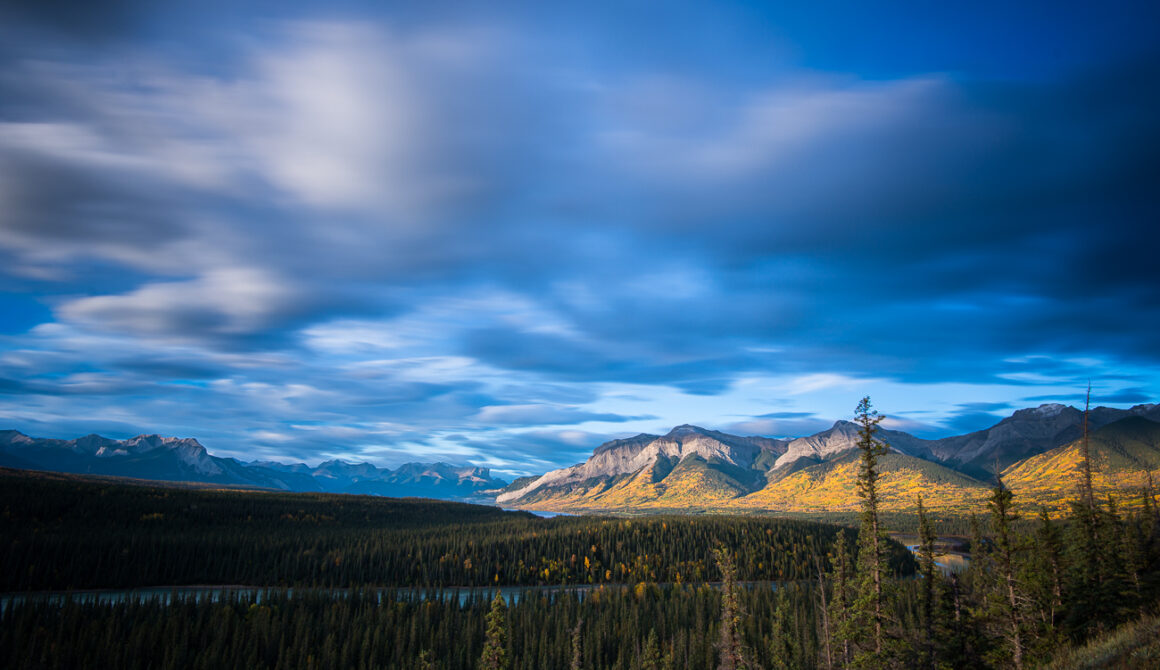
- How do landscapes contribute to a sense of identity?
- Why might the same Alberta landscape represent different things to different people?
- How can an artist communicate political disagreement without using political slogans?
- What symbols have become associated with Alberta?
- What happens when a symbol that represents pride to one person represents exclusion or conflict to another?
- Can artwork represent both Alberta’s distinct identity and its connection to Canada?
Activity: One Alberta, Five Views
Create five small visual compositions representing Alberta through different lenses:
1. Alberta as a resource powerhouse
2. Alberta as a place of Indigenous history and treaty relationships
3. Alberta as an agricultural province
4. Alberta as an energy and technology centre
5. Alberta as part of Canada
You can use:
- photography
- collage
- illustration
- maps
- typography
- digital art
- found imagery
Create a sixth image combining all five perspectives.
The question: Can one image tell a story about Alberta without reducing Alberta to one identity?
Careers
Theme: What happens when political decisions affect an economy?
Reflection Questions
- Which careers depend directly on Alberta’s natural resources?
- Which careers support resource industries without actually extracting resources?
- What careers might be affected by uncertainty over Alberta’s constitutional future?
- What skills are needed to negotiate between governments?
- What careers are involved in constitutional law?
- What careers are needed to assess the economic and environmental consequences of major political decisions?
- How might changing immigration policy affect Alberta’s workforce?
- Why might businesses care about political and constitutional stability?
Activity: You Work in Alberta’s Future
Select a career:
- Engineer
- Geologist
- Farmer
- Economist
- Lawyer
- Environmental scientist
- Energy worker
- Entrepreneur
- Indigenous relations specialist
- Transportation planner
- Journalist
- Software developer
- Skilled tradesperson
- International trade specialist
Now read this scenario and answer the questions:
Alberta is considering significant changes to its relationship with the federal government.
- What opportunities might this create for my career?
- What uncertainties might it create?
- What information would I need before making a career or business decision?
- What other careers would I need to work with?
Cross Curricular Activity
What Does Alberta Need to Know?
Divide into five groups (departments):
Science
What environmental information do we need?
Social Studies
Who has constitutional authority?
English
What information is fact, interpretation or persuasion?
Visual Storytelling/Art
Whose identity and perspective are being represented?
Careers
What could different economic sectors and workers experience?
Now answer the question: What could changing Alberta’s relationship with Canada mean?
Produce five questions. Yes. Questions. Not five answers.
Bring the questions together.
Then identify:
- Questions we can answer with evidence
- Questions that require interpretation
- Questions that cannot be known yet
Referenced Resources
- Elections Alberta
- Albertans are voting on Oct. 19.
- Alberta is to vote on holding a separation referendum.
- West vs East: Provincial – Federal Antagonism
- National Energy Program (1980–1984)
- Provincial-Federal Confrontations
- Danielle Smith Will Lead the United Conservatives She Helped Divide
- Alberta finalizes wording for referendum question on separation
- Alberta referendum polls
- What to expect when you’re voting in the Alberta referendum
- Danielle Smith acknowledges foreign influence campaigns
- Albertans targeted by pro-separation ‘influence campaigns’
- Alberta government launches ad campaign on referendum questions
- Alberta separation question to top stack of 10 colour-coded ballots in fall referendum
- (Im)balance of power – How federal overreach fuels Western Alienation
- The West Wants Out: A Manufactured Threat From an Old Playbook