Why Nature?
No matter our age, no matter where we live, nature matters. But though we know we should care about nature, many of us aren’t sure why – or even how – to care.
Now add on the complex issues we face in our society: the dual crises of housing and cost of living, economic uncertainty, threats to democracy, global conflicts and the rise of misinformation.
We need common ground ––something that brings us together to talk, listen, and learn. That’s where nature comes in.
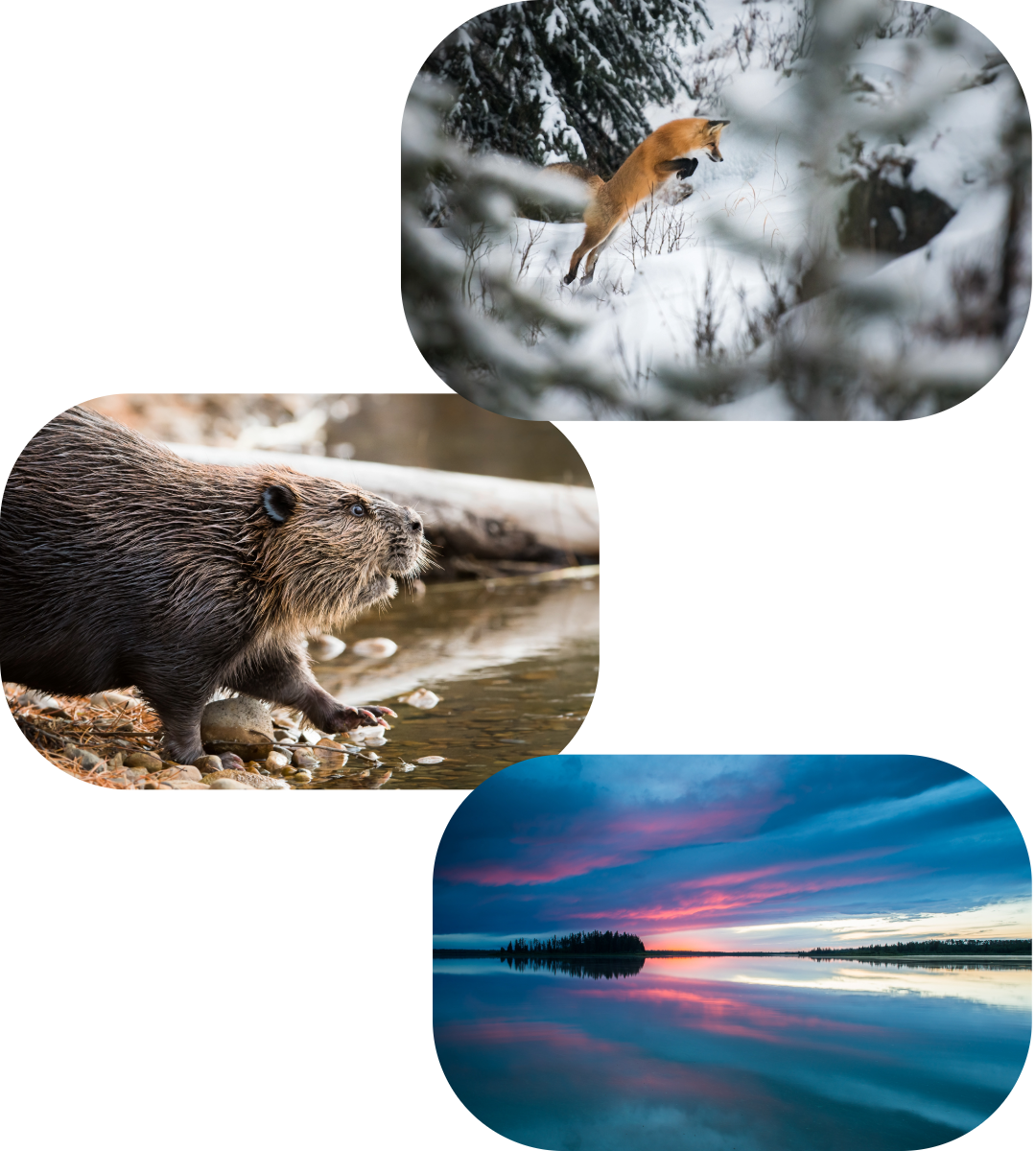
Whether it’s a fox in the woods, a busy beaver in the city, or simply a beautiful sunset, nature offers daily moments we often overlook. Yet when we pause and notice, we realize nature’s beauty is the one thing we can all agree on. While the environment can divide, nature unites us – it’s our shared humanity.
Appreciating nature helps us understand our place in a vast, interconnected system. After all, biodiversity sustains life: it provides oxygen, it filters our water, it gives us food and medicine, it cleans our pollution, it decomposes our waste, and it regulates our climate.
More than that though, nature allows us to find a common starting point for learning. And nature can teach us.
Its stories – like a beaver saving a neighbourhood or a fox caring for her family – reflect our own lives, spark wonder, and help us see that everything serves a purpose, including us.
When we value all life – when we value our own contributions – we think more critically and act more creatively, creating a better world in the process.
This is why nature matters – and why experiencing it together matters even more. Today, and every day.
Why Nature Education?
Nature education is more than learning names of trees or ecosystems. It helps students rediscover their place in the world by connecting classroom learning with real outdoor experiences.
Nature learning offers:

- Curiosity and Creativity: Exploring nature sparks science questions, poems, and math problems inspired by real-world patterns.
- Well-being: Time outdoors reduces stress, improves focus, and supports mental health – skills every learner needs to thrive.
- Empathy and Responsibility: Seeing nature first-hand teaches how biodiversity supports clean air, fresh water, healthy food, and a stable climate.
- Reconciliation and Inclusion: Indigenous knowledge and land-based stories foster respect, reciprocity, and connection across cultures and generations.
- Essential Skills for Changing Times: Nature education builds critical thinking, collaboration, adaptability and hope.
Nature learning is hands-on and dynamic, showing students that learning goes beyond classroom walls. It helps them see that nature is the context of human life – and that we are not separate from it.
When students realize for themselves that nature is valuable, that’s when learning becomes lasting. After all, once we understand why nature matters, we begin to understand why we matter, too.
