Estimated Read Time: 42 minutes
Canada at a Crossroads
We’re at a precarious moment as a country. Because we’re facing multiple problems, each intertwined with the others, all compounding crisis after crisis. We have to learn to tackle multiple problems all at once, at scale and with speed. None of this will be easy, by now you know.
But here’s the thing: without democracy? We won’t have any chance at all of not only solving the problems but continuing as a country.

“Democracy is critical, because the stakes for the quality and caliber of our civic life are incredibly high.”
Peter Biro is a lawyer, a human rights scholar activist and a scholar. He’s also the founder of Section One and SIDE – Students in Democracy Education.
“Liberal democracy is the only societal arrangement in which we can live to our fullest potential as free and equal person.”
And through Section 1 and its Students in Democracy Education project, a partner of Nature Labs, Peter is on a mission to better our democracy.
“I talk about arming the civic immune system. I talk about recommissioning the machinery of accountability, which is not the laws and the institutions. A better ombudsman, a better Ethics Commissioner, a better Auditor General. Those are all good things, but I’m talking about a better you and a better me.”
Why?
“There can be no liberal democracy without a societal commitment to liberal democracy.”
Now, before we go further, a quick bit of background that’s probably worth explaining. Liberal democracy, that’s not Liberal as in big L liberal party of Canada, as Peter explains.
“The term liberal democracy has nothing to do with partisan politics. Liberalism, of the kind I’m speaking of, is one that is concerned essentially with the rights of people, and is a big tent. There are conservatives, there are social democrats. It is not partisan.”
And a liberal democracy is what makes us equal – left and right, urban and rural, north and south, east and west, Indigenous, French and English.
“What liberalism does to the majority? It says, okay, majorities are going to – by and large – make a lot of the big decisions, but there are times when those decisions violate individual rights, and in those situations, we’re going to put a bit of a check on the full expression of the will of the people.”
In other words, a functioning liberal democracy protects our basic rights that we love and often take for granted.
“We have rights; your right to practice your religion, your right to have the opinions and thoughts and beliefs that are yours that no one can take away. It doesn’t make you right in any of your thoughts and opinions, but it means you’ve got those fundamental rights.”
As Kim Campbell explains, think of liberal democracy in this way.
“First of all, it is founded on the notion of the rule of law, which is one of the most precious concepts ever created. The law needs to apply equally to everybody, and we need to be vigilant about that. Our whole justice system is the foundation of democracy.”
But here’s the thing about democracy.
“I am increasingly concerned about the fragility of democracy in the current global context, about the decline of civility and public and political discourse, the decline in respect for our public institutions and democratic conventions, about the erosion of trust in the main institutions of society. This is an extremely dangerous situation, and while Canada enjoys a measure of stability that is not enjoyed by many of the countries around the world, we need to value and nurture it. We cannot take it for granted.” – Janet Austin | Former Lieutenant Governor of BC
“Never, ever, ever taken for granted our democracy as many challenges as we may have by and large, we deal with those challenges in debate and discussion, sometimes fractious, sometimes a tad immature. I was even guilty of that on a couple of occasions. But we do it generally respectfully and free from intimidation, free from violence.” – Erin O’Toole | Former Leader of the Conservative Party
“There’s a kind of a natural metaphor that I use for that. Different behaviors can be very successful. I’m not judging here, I’m just describing it – China is more like an ant colony. There’s the hive. People are devoted to the success of the group, and they’ll subordinate their personal interest for group success. What they are doing is behaving in a way very consistently with their traditions, institutions and the way they see the world.
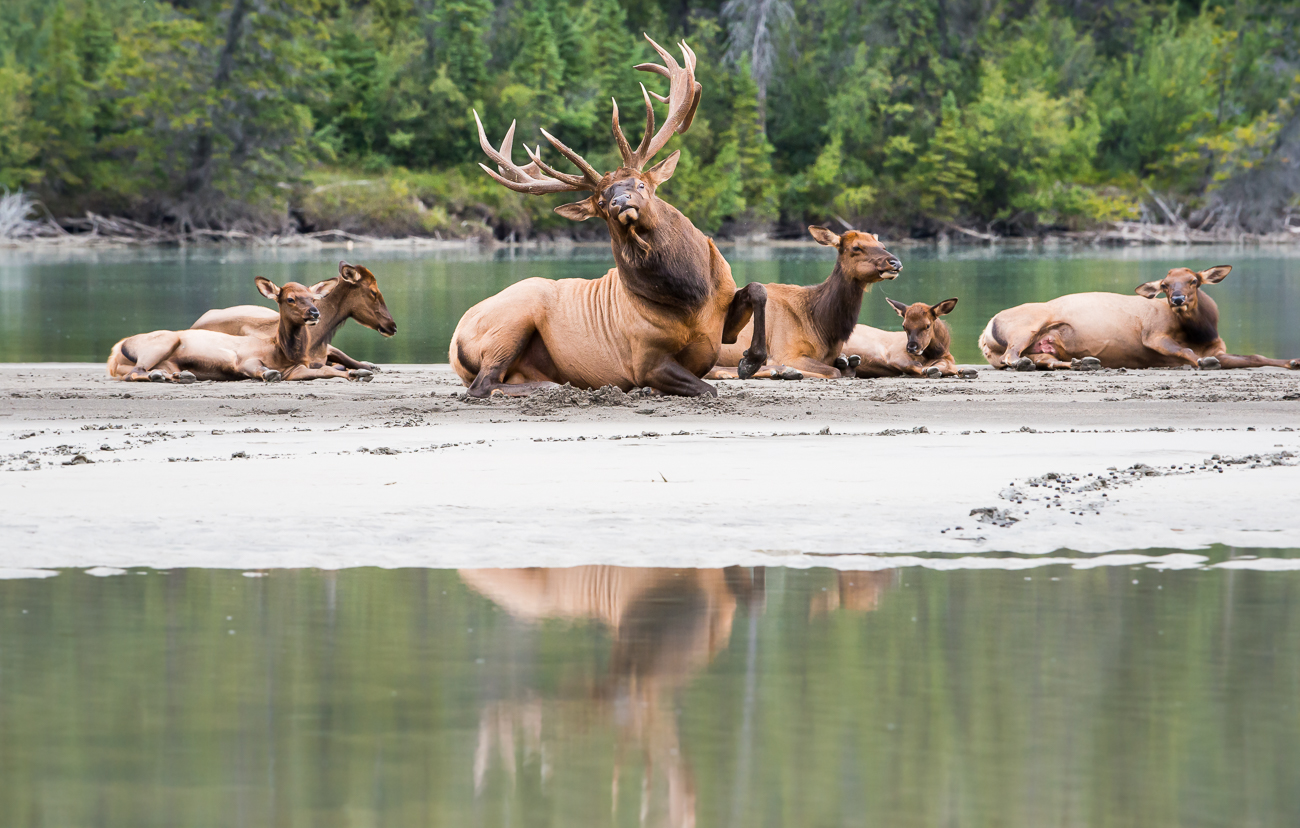 We’re more like an elk herd, where the female elk see one bull and then, oh, he looks good, but you know, there’s another bull. I think I might go over there still a herd, but still that’s a personal choice about enabling the best result or being my offspring in my family. Elk herds are successful social organizations, and so are adults, but when you’re an elk, you’ve got to be an elk. And if we subordinate ourselves to dictators, when you’re an elk, it’s going to go very, very, very badly because it’s against our social norms.
What people do when they do that is they project it outwards and find groups to blame. They take that subordination, say, I’m subordinating so I can. Harm some other group that I perceive has harmed me, and you get what Nazi Germany did. That darkness is there if you don’t take responsibility for yourself and your own happiness. You have to recognize that your happiness is not about you individually. You have to participate in the group to create the conditions that enable the kind of world that you want, and then you have to participate in what the world you want is. You can even participate in shaping what that means – which is the beauty of democracy. You actually have an opinion of what that world you want is, and that opinion has a chance of actually shaping the future.” – Harvey Locke | Biodiversity Expert
“That is pretty darn amazing. It’s fleeting in this world, some of the indices of the human freedom index are going in the wrong way. There’s less freedom than the year before. What we have in Canada is pretty special.” – Erin O’Toole | Former Leader of the Conservative Party
What is the state of democracy in Canada?
“We are not immune to this backsliding, and we cannot afford to be smug in Canada about the character or the resilience of our democracy. We’re in better shape than most places in the world for a number of reasons, some to our credit, but some are just a matter of dumb luck.” – Peter Biro | Founder of Section1.ca
What we’ve done right?
“We’ve drafted an amazing constitution. We have a great history of commitment to an independent judiciary, to a decent parliamentary process. We protect rights and freedoms.” – Peter Biro | Founder of Section1.ca
And that’s all important, but here’s the thing:
“Our system of government, our Constitution, is important, but it’s not the most important thing, not even close, because the real machinery of accountability is you and I.” – Peter Biro | Founder of Section1.ca
You’ve heard this a lot but it bears repeating: Our society – our systems, our problems, our options, our choices – are a reflection of us.
“Because we’re the ones that hold power accountable, and we are the ones that insist on making the institutions do the work they were supposed to do. We’re the ones that decide whether the Constitution is going to be enforced or not.” – Peter Biro | Founder of Section1.ca
And yet, in many corners of the world, because we’ve failed to understand our democracy – failed to be good stewards of democracy – it’s in retreat.
“Worldwide we’re in big trouble. Democratic backsliding, or democratic decline has taken a hold around the world, most importantly in the United States of America, that has long been seen rightly or wrongly, the leader of the free world.”
Peter isn’t a partisan, he’s a constitutional scholar – a lawyer school in the fundamental tenants of democracy. And this context is what makes this next comment so chilling.
“A brilliant constitution, brilliant separation of powers, brilliant political structure. It’s not working right now because the President [of the United States] has decided that the Constitution doesn’t matter, and the leadership in congress right now have abdicated their oversight responsibility. So suddenly, you still got this constitution, you still have the senate and the congress, but they’re not doing what they’re supposed to be doing.”
The consequence?
 “The United States is no longer a liberal constitutional democracy. It is now an electoral autocracy with the promise, or at least with shades of a police state to come.”
Now, when it comes to the state of American democracy and its place in our world – when it comes to Trump and his threats to Canada – we often hear it’s fleeting. It’s just a moment in time. Things will change. Peter Biro has a different take.
“It’s not going to come easily. Simply putting the other party, the Democrats, for example, back in control of congress and the White House in the next couple of election cycles, that alone doesn’t rehabilitate liberal democracy. First of all, that doesn’t undo the enormous damage that is being done right now, damage that will have long lasting, if not permanent, implications for the United States and for the civic culture of the United States.”
How did we get here? Well, if you remember last chapter, we discussed how indecision and half measures begin to add up.
“Movements happen organically. They are made up of moments.”
Exactly Shachi Kurl. Moments add together to create circumstances that eventually push society to a tipping point.
“The rise of Trump started at least six years before he was first elected. People forget it with the Tea Party. In 2008, the world – and America specifically – was rocked by a financial crisis known as the Great Recession. Banks failed, businesses closed, people lost their jobs and their homes. In retrospect, this was the tipping point, the beginning of everything that we see today. For the first time, the Great Recession made wealth or economic inequality an issue, not only of the political left, but also of the political right.
 In fact, the line between the political left and right began to blur as well, with both sides believing that those in the political middle, those increasingly seen as the establishment or as globalists, recklessly rigged the system for their benefit, leaving the working class to pay the bill.
“The Tea Party was one movement that helped give voice to the growing anger surrounding this issue.” – Hamish Marshall | Conservative Strategist
You see, in 2008, the world – and America particularly – was rocked by a financial crisis known as the Great Recession. Banks failed. Businesses close. People lost their jobs and their homes. In reflection, this was almost certainly the tipping point. For the first time this crisis made economic inequality an issue nor only of the political left, but also the political right. In fact, the line between the [political left and right began to blur, as common cause was found in the belief that the establishment – elites – recklessly rigged the system for their benefit, leaving the working class to pay the bill.”
And one movement that helped give voice to this growing anger was the Tea Party and as Hamish explains:
“Trump was the one who finally harnessed that energy. Kirk metastasized it a bit, but it was really that energy that took him to the White House the first time.”
The movement around wealth inequality that brought trump to the white house and, in turn, has allowed him to threatened Canada, isn’t as pronounced on this side of the border, as Heather Scoffield explains.
“Wealth inequality – let’s call it – that has been a problem, especially in the United States. It’s not been as bad here – I don’t want to say that it’s invisible here – but it’s not been as bad. And why is that? We’ve had it. We have a very different tax system and redistribution of income system than they have in the United States, and then it’s kind of taken the edge off. We’ve been able to avoid the extremes and less tension between the rich and the poor that we see elsewhere, and I think that gives us something to work with.”
Canada has been somewhat insulated from the issues we see unfolding in America and in so many western democracies, as Hamish explains.
“What we’ve seen in Europe, whether it’s the AfD in Germany or other parties on the more populous right and populist left, is that the historic parties of power that’d be on the center right or the center left have really ignored large chunks of the population and have thus lost out to new parties on both the right and the left. That hasn’t happened in Canada, and I think it’s an example of our political system responding and working reasonably well. Until now.”
Until now.
Why the caveat? Because Canada isn’t immune to what happens beyond our borders. And, as we’ve already covered, the seeds of a populist uprising have been planted on this side of the border as well.
“These things come in waves of political populous anger that fires up for 4 to 7 years and then quietens it down for a decade, and then comes back more and stronger than ever as feelings of economic change work their way through a country.”
And it’s about now we need to define the word populism – what it can mean, what it has meant to Canada.
“Populism is just democracy exemplified.”
“It’s usually used these days in rather critical or negative terms. It doesn’t mean it has to be in Canada, the social credit movement is a populist movement. The NDP, in its early days, was very much a populist movement. It was the sort of left wing version of social credit both came out of the social gospel, sort of tradition that was very deep in the west and that, by the way, gave Canada some of its most important institutions, including, by the way, our public health system.” – Peter Biro
But populism isn’t always positive and as Peter explains, populism?
“I think of it as a factor in the backsliding of democracy as this practice that now dominates our politics. We may not realize it. We think of Trump as the ultimate populist, but it dominates everybody’s politics in the West. What it does is it says, I am your leader. I care about you. I care about your welfare. Leave it to me. I have the answers. I will be your voice in Trump’s language. I will be your retribution, speaking to the grievances of Americans. It results in a very, very docile, passive, submissive kind of democracy in which the public essentially is reduced to a rubber stamp every once in a while on a set of policies or programs.
A government that may have started out with the very best of intentions falls prey to Lord Acton’s famous dictum that power corrupts and absolute power corrupts absolutely. None of us is immune to this. We’re talking about human nature. We’re not talking about dictators as though there’s something different from the rest of us. They’re just human beings who may or may not have wanted power. Likely they did, but when they got it, they wanted more of it, and more of it and more of it.
The impact of that is that the will of the people, to the extent that it finds any expression, is reduced to being wholly manipulated by leadership, and that’s what populism does. It’s not that there isn’t civic engagement in a populist system of government. Nobody would say that Trump’s base is fully engaged, but it shows you that civic engagement alone isn’t the answer to a rich and vibrant democracy. You’ve got to ask the question – what kind of engagement?”
 He’s right. So why are many populations allowing for this to happen?
“For three reasons: fear and it’s weaponization, habituation, or the phenomenon of not noticing what is going on in plain sight and reacting to it. The third thing I call the Stupidification Process, whereby we are bombarded, we’re gassed with stupid, ridiculous, untrue claims. Our minds are filled with them – conspiracy theories, wrong-headed notions that are completely indifferent to what we’ve already learned from science, and we are spending all of our time engaging in social media bubbles – in echo chambers – not learning, not listening and not achieving consensus on the things that we all must agree with. Not because our opinions lead us to such agreement, but because, as rational human beings, we know that facts are facts.”
And this is a very important point. Because at this moment, many Canadians blame Trump for the ills of our world, for the ills of our country. And we think the populist right – globally – is eroding the world we cherish. But here’s the thing we’d all do well to understand. What’s happening in America, what’s happening in western democracies, what might yet happen in Canada? Most of us have had a hand in it.
And like Trump and his movement, these three issues that Peter outlined can also be traced back, in many ways, to 2008 and the aftermath of the Great Recession. Because the movements that took hold spread across America and around the world alongside the tool that helped reboot the American economy and shift how we consume information. I’m talking about, of course, social media.
“What’s interesting about tech is it’s transformed, because in the early days, it was a very optimistic area. Today’s tech, we have to be more careful, because there’s a two-edged sword to it.”
And Randall Howard should know. He’s one of Canada’s leading angel investors and most celebrated tech entrepreneurs. And he’s had a front row seat for the evolution of technology, social media and how it’s shaped our present moment.
“We look at a number of the large companies that control both huge amounts of economic value, but also enormous amounts of data about each of us, such that we don’t have privacy anymore. And I’m talking about Facebook, Google, Microsoft. There’s a term for that, called surveillance capitalism.
What you don’t realize is that you and your data are the product, and you’re getting some value out of it. So the paradox of these companies is that they can do significant damage to the democracy, to the institutions that we hold dear at the same time as providing a service that you love, being able to communicate and stay connected.”
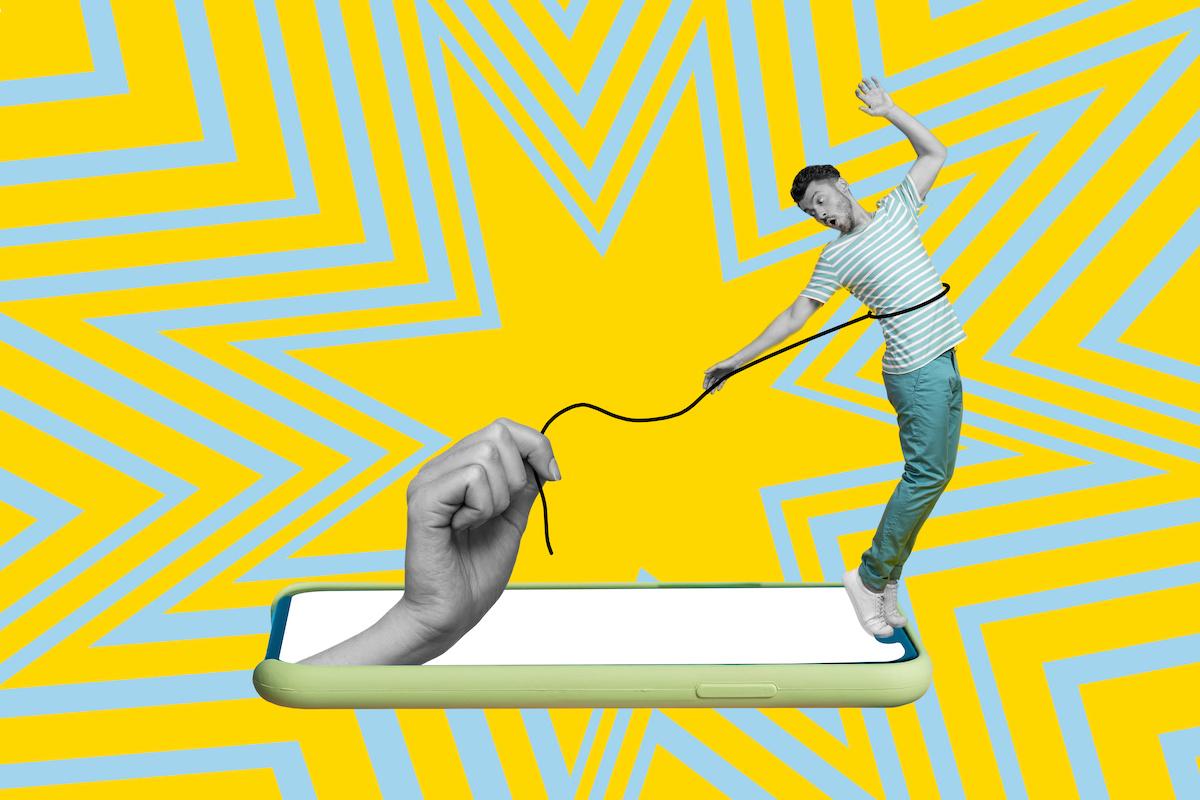 And we loved what social media offered almost from the first moment we interacted with it. And our love was basically blind, as Randall continues.
“I think the frustration I have is how these companies have subtly become, in some sense, more important than governments, more important than any laws or any regulatory environment. We as a society have allowed it to happen, partly because people didn’t really understand it, and partly because people go, ‘Well, I like using Facebook. I like using Google’, which I think all of us do.”
And we really loved what social media offered during the pandemic.
Remember what Erin O’Toole said earlier in our story?
“It was the over reliance on social media and the destructive elements of it that exacerbated existing tensions in our country.”
Why?
The pandemic might be long in the rearview mirror, but Randall asks:
“Can we get that genie back in the bottle? For example, with Facebook has real damage to people your age in terms of access to extreme content, and that is that’s horrible. But even bigger than that is the damage to democracy and society.”
How so?
Well, it’s more complicated than you might think, as Erin O’Toole explains.
“People don’t realize that your algorithm gives you what it thinks you want. If you’ve watched one sort of angry foaming at the mouth video on something on left or right, they’re going to feed you more of that. If you don’t step out of your own algorithm bubble, your own preference bubble, by only your own preferences, you don’t realize you’re not actually hearing a real discussion. You’re actually being misled.”
Misled by whom?
“Our adversaries, Russia, China, maybe even some other countries, use this algorithmic rage generation to divide us as a country.”
The question you probably have is why. Erin says:
“Foreign interference is a wide swath of activities. It can be everything from physical intimidation of people in their own communities, and that happened in some parts of the Greater Toronto Area and the Greater Vancouver region. It can also take the form of algorithms itself, and particularly on foreign social media platforms like WeChat.”
Look, this is a serious, bigger topic for another day, but here’s what you must understand today.
“In Canada, one of the world’s great democracies, is if even one person was intimidated by a foreign actor to not vote or to change their vote. That should concern Canadians, because if we allow that to happen with 10,000 people, maybe it could become 100,000 could become a million, if we allow these techniques to stay in place.”
This is how something seemingly iniquitous like a post on social media can kickstart the process of democratic backsliding.
That, of course, can have major consequences. Think about this:
Even America – or social media companies who have increasing free reign in America and want Canada to limit some restriction or losses other – might also have skin in the game, especially if it flips movements and policies. That can turn seemingly unimportant debates serious very fast.
You see, if we build more infrastructure – pipelines, say – to export our resources – oil, say – to nations other than America – China, say – will we really be that much better off?
China, if you haven’t heard, kidnapped and held two Canadian citizens hostage for several years, has been propping up the brutal, illegal Russian invasion of the Ukraine, and is actively interfering in democratic elections, including in Canada!
Is that the diversified trade market that will solve our tariff problem?
Well, there’s India too, right?
India has been accused of assassinating a Canadian citizen on Canadian soil, has been propping up the brutal, illegal Russian invasion of the Ukraine, and is actively interfering in democratic elections, including in Canada!
In other words, the choices we face as a nation? We not be even capable of making the right decision for our country if we’re being manipulated by other actors and even other nations to reach a conclusion they want us to reach.
As Erin says.
“What Canada has to do, whether it’s any of the countries you mentioned, is go into these relationships with eyes wide open. There are economic opportunities that we should pursue, but we should never lose sight of the human rights records, the environmental records, the security position. We can still have serious diplomatic challenges or concerns with countries as we do trade with them. Sometimes trade can actually balance out some of these differences, and we can build trust.”
But Erin adds, “if sometimes we have to forego trade opportunities to stand up for those values, that’s what I think Canada should do. Trade and all of these geopolitical issues and diplomatic relationships are easy with countries that we share history and values with. It’s easy to do this with Australia or the United Kingdom. It’s much harder to do it with countries where we don’t have that long history and we don’t have an alignment on values.”
Is the issue of foreign interference being taken seriously in Canada?
“We are as a country, starting to grapple with it, but I do think it’s up to Canadians to also grapple with it and recognize it, but also be skeptical. Be skeptical of everything you see online, particularly if there’s no source at all to it. You should not be believing it.”
And yet we are.
“We’ve enabled something that’s called post modernism, and we’ve enabled it on what has been historically both perceived as the political left and the political right. Post modernism consists of tearing things down, not in order to have a phoenix that rises from the ashes or to build something new. It simply consists of tearing down. Post modernism has infected political conversation. It’s infected our sense that we can’t get anything done.” – Harvey Locke | Biodiversity Expert
 “A lot of these technology platforms amplify those voices.” – Randall Howard | Angel Investor and Entrepreneur
“We’re living in a world in which the truth is not the truth anymore. It has been completely delegitimized. It’s been denuded of its moral authority. We live in a world of alternative facts, where everyone’s entitled to their own facts.” – Peter Biro | Founder of Section1.ca
“And now we have this fragmentation where people do retreat into their own media bubbles, and they do consume media which only confirms their own prior biases, which we are able now to more or less shut out media that we don’t want to hear. It doesn’t conform with what we already believe. And that’s a problem.” – Will Greaves | Federal Liberal MP
“It’s not just a problem in terms of political parties and big business, it’s a problem in everybody’s daily lives. Who do you believe when you want to know what’s going on in the world? We’re at a point here where there are many, many challenges that if we don’t handle them correctly, they’re going to affect the way we live every day.” – Heather Scoffield | Business Journalist
“We’re losing our certainties, we’re losing our goal posts, and when you watch that lying is elevated to a public art when lying used to be the measure of bad performance, now it’s sort of seen as justifying world views and reaffirming opinions.” – Harvey Locke | Biodiversity Expert
“We get used to lower and lower and lower standards, lower standards of behavior, lower standards of communication, lower moral standards. We come to tolerate toxicity in our public square. We come to tolerate the deriding of judges and the name calling and the treatment of people whose opinions we don’t share as being enemies of the state, as being traitors, rather than being people who you know, have a position that we should entertain seriously, if for nothing else, to come to the place where we finally understand why we disagree and whether we can find agreement and generate consensus.” – Peter Biro | Founder of Section1.ca
“It’s an interesting thing when we believe that this polarization is happening to us, we’re choosing this. We’re making choices to only hear people who sound like us, and to use products that make that easier.” – Jerry McGrath | Executive Director of the Japanese Canadian Cultural Centre
“If you think about surveillance capitalism, what happens with the content is that the content is the most compelling, is often the most shocking, and so there’s a tendency to take people from moderate positions to more and more extreme positions.
This is why democracy isn’t working. I think that each of you need to understand that when you give up your privacy and live in a world where everyone knows everything about you, particularly the big companies, you’ve got to understand that has consequences. Invasion of privacy of the big tech companies is what is undermining our society. And it’s not just enabling them to be rich, which is their purpose, but it’s fueling autocrats. And to be honest, I think these terraforms trace directly to the power of those companies to have installed the president who is south of the border right now is very much a product of that surveillance capitalism.” – Randall Howard | Angel Investor and Entrepreneur
“So stupidification makes it much easier for us to subordinate ourselves to the will of an autocrat or an aspiring autocrat. In fact, stupidity and autocracy go hand in hand.” – Peter Biro | Founder of Section1.ca
And here’s where we need a little real talk. Increasingly, the driving force behind post-modern movements, the divisive discourse and the stagnation of solution-making, the decline of democracy and the rise of autocracy, and the amplification of extremism?
It’s you.
Ilona Dougherty agrees.
“We tend to think of young people as being progressive all the time. The stats don’t actually bear that out.”
And it is understandable, as Ilona explains.
“They’re saying that they’re working with young people to solve the problem. They’re offering clarity. Whether they’re actually going to deliver on solutions is another question, but they’re offering solutions and most importantly, they’re drawn to the folks who are speaking to them.”
Let’s be clear. We’re not talking about young people increasingly backing conservative parties and conservative policies. That’s decision is, despite popular belief, not uncommon and nor is it remotely wrong.
“Again, we’re all looking for clarity. We’re all looking for stability in a context of rapid change. And I think often folks who maybe. Aren’t actually telling the truth, or who are just speaking in sound bites, can be really kind of alluring in that in that context.”
 What we’re talking about here is the increasing number of young people who embracing extremism and fanning the flames of misinformation, hate and autocracy.
This all sounds very familiar…right Harvey Locke?
“The fundamental turbulence of our moment is deeply unsettling. We’re not the first group of humans to go through that. Let’s start here. So go back 500 years. You’re moving out of the medieval period, which is dominated by very centralized system of monarchies and the Catholic Church, as we call it now. And then, that shifted into the Renaissance, meaning a revival of ideas from the Greeks, particularly about democracy and individual initiative, as opposed to just purely collective things, and that period of time was one of just enormous turbulence.
My favourite example is that the famous artist Michelangelo, who was sponsored by this super wealthy merchant family, he was doing all these things that reflected Renaissance art at the same period of time that there was a counter reaction to it, led by a man named Brother Savonarola, who did book burnings as a complete counter reaction to that emergence of ‘let’s look at what the Greeks thought about how we could organize ourselves when we imagine that and Savonarola is responsible. Let’s burn all the books’.”
In other words, in periods of mass change, then as now, extremist movements come forward in response.
“The old order is dying and the new order is being born. It is the time of monsters.”
Exactly. And if history has shown us anything, it’s that we rarely recognize monster in the moment.
“Even our state of un-freedom, relative unfreed, diminished freedom, is something that we get used to. Studies were done in the 1930s during the transition from the Weimar Republic to the Third Reich to that period when the very first democratically elected German government collapsed, and in its place came fascism. And what the studies show clearly was that really bright and smart and well meaning, law abiding and more or less decent citizens chose to go along, to get along, rather than to stand up. Why? Because of fear, because of habituation to lower standards, and because the political discourse got dumber and dumber and dumber, and so the means with which to challenge the regime became badly damaged.”
A leading driver of that moment? A movement of young people angry about issues of inequality.
“There’s really interesting research about young people in extremism. We think of young people who’ve decided to either join a gang or be involved in some kind of potentially terrorist activity, and then young people who’ve decided to do positive things in their community. And there’s a lot of similarities. We’re looking for meaning. We’re looking for a sense of community. We’re looking to do something that matters.” – Ilona Dougherty | Youth & Innovation Project
So, again, none of this is new. Rapid change. Mounting problems. Economic inequality. Apathy and hopelessness. Heck, even book burnings and youth-driven extremist political movements have been part and parcel of all of this. It has all happened before. And with it came democratic decline and, of course, usually something far, far worse.
“Whenever we have had democracy with groups of people this frame of mind since the enlightenment, we’ve had terrible wars of destruction and violence towards minorities and everything else.” – Harvey Locke | Biodiversity Expert
It’s why, as Erin O’Toole says

“Study history. Study history. Study history. Because you don’t know what to do today unless you understand where we were yesterday.”
And where we’re going? It’s not pretty. Which begs the question. Could never again actually happen again?
“In a one-word answer to your question about whether ever again it can happen, the answer is absolutely yes, it can happen. It is happening in some ways. We’ve seen it already happen. It’s not just that we’ve seen genocides, but we’ve seen the cultivation of the soil that makes it fertile ground for never again to happen again, and one of the greatest risks of that occurring is our failure to understand that it will always be possible. It requires vigilance and it requires preparation and skill and practice in order to ensure that it doesn’t happen again. So the odds of it not happening again and again and again are very, very slim. Very, very slim. They need to understand what the stakes actually are. They need to understand what the consequences are of a society that doesn’t respect any of these important fundamental rules, not in the abstract, but in very practical terms.” – Peter Biro | Founder of Section1.ca
“The Holocaust, what happened in World War Two, is actually fading from people’s memory. And that was really fascinating to me, that we could forget something like that – one of the worst things that happened in human history. And that tells me that if we are able to forget about that, then people really, truly just don’t care about nature and things like that. People just aren’t going to be that concerned about those things that they can easily forget about one of the biggest atrocities in human history. That’s something that we as a society really need to work on.” – Terrence Jackson | US National Parks
“We need to expose people to what that experience was, so that people can actually get it into their system that they’re touched, not just mentally and intellectually, but viscerally. That they can feel it. Because the idea is not to make people more empathetic. It’s not that empathy isn’t a good thing. It’s critical in the civilization, but what we want is to condition every one of our citizens to kind of produce what I call an allergic reaction to any instance in which those fundamentals of liberal democracy are threatened, not just as the matter of principle, but at a visceral level, at the level of the nervous system, if you will, because that’s the only way that we will get average, decent, law abiding citizens to not fall prey to fear habituation and stupidification.
It isn’t just about wanting to make the world a better case. It’s understanding in your bones what the stakes are if we don’t protect certain values, certain interests, whether it’s the environment, whether it’s species at risk, we are a species at risk as human beings, and the planet as a whole is at risk.
What we need to do is not to be morally virtuous, and certainly not to be virtue signalers. What we need to do is be very self-interested, but in an enlightened way. And that self-interest is not an intellectual exercise only, that’s part of it, because you do need to be able to justify actions and policies and objections that you bring to what you see around you, and you need to act intelligently, and you need to be able to defend your choice of reaction and response and propose solution.
But you need to feel in your bones that something is amiss, that something is wrong, that there is trouble on the horizon when certain things occur, and they can be things that are the most ordinary things. It can be a minister of the crown who acts on the instruction of the prime minister to prosecute somebody. Well, that’s a violation of the independence of the prosecutorial branch of government, something that we see Donald Trump violating constantly. But we don’t get excited when previous prime minister tells the attorney general not to proceed with the prosecution of a major consulting firm on fraud and instead to give them a sweetheart deal for political reasons. Okay, it happens that’s politics, but we don’t understand the threat that that poses to the civic culture that is all about preserving our freedom.” – Peter Biro | Section1.ca
“Winston Churchill once said that democracy was the worst form of government except for all the others, and I think that’s true. As long as human beings are making it right, it’s going to reflect all of the human virtues and flaws. – Rt. Hn. Kim Campbell | Former Prime Minister
“There are other much more efficient ways of organizing our society. Authoritarianism is far more efficient. It doesn’t require all of the niceties and the complications and the bureaucracy of a democracy and the messiness of a democracy.” – Peter Biro | Section1.ca
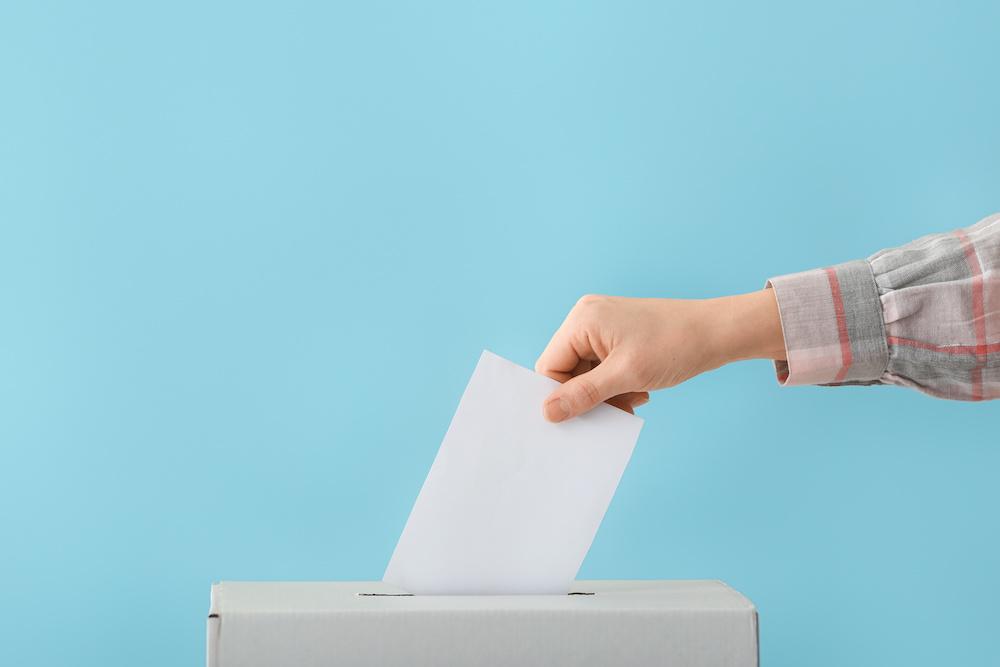 I’ve seen the alternative to democracy, and I’ve seen the price that people have paid for us to be able to do what we’re doing, and it’s not perfect, and there are a lot of idiots who do it, but there are also wonderful people who do it, and in every election, more people lose than win, but the fact that the voters have a choice that is so important.” – Rt. Hn. Kim Campbell | Former Prime Minister
“You’ve got societies in which people live incredibly decadent lives behind gated communities. Those people are wealthy, they’re prosperous and they’re scared, and when they go outside their gated communities, they may be able to buy every toy and gadget known to man, but they don’t have real freedom, and they don’t get to live in a society in which everybody respects the right of everyone else to be free.” – Peter Biro | Section1.ca
“If one looks at the world today, very dangerous, complicated times. It could skew countries or societies or the world into ecological oblivion or war, or require teenagers in battles to lose their lives instead of have their futures.” – Rick Antonson | Author
“We have a responsibility to think about what a well-ordered society really looks like and what the stakes are for us in not living as responsible stewards of our democracy, rather than giving over the responsibilities of government to populists who promise us that they’ll take care of us and that they have all the answers. – Peter Biro | Section1.ca
“Do not take anything for granted. Do not take a healthy sustainable economy or a healthy sustainable environment or a healthy and sustainable world for granted.” – Rick Antonson | Author
Truer words. Because everything is connected. The division. The fear. The history. Our inability to agree on truth or act with clarity and purpose. The threats to our economy, our environment, our security, our sovereignty? They all come back to democracy, or more specifically, democratic decline.
And that’s why as bad as this moment is or might become for Canada, if history has taught us anything, it can still get worse.
We can’t forget that. And we can’t forget that it’s not too late to make things better.
“What if you’re right? What if everything you said is right? What then? Try to do something about it, because otherwise it’s pointless.
Analyzing that things feel not good is an intelligent conclusion. Doing nothing about it is an unintelligent behavior. And unfortunately, the postmodern thing is: well, doing nothing about it is a good response. So people have been allowed to marinate and shout about how angry they are and how distrustful they are, but that isn’t going to get you or anyone else anywhere. We’ve got to get behind some ideas and then go there do the ideas that are meaningful to overcome the problems that you just identified. People feel that the future is compromised. Well, it is compromised. But the future is what you make it.” – Harvey Locke | Biodiversity Expert
“We need to own our perspectives on the world. We need to be responsible for the choices that we make, and I think attributing that all the time to other forces. Yes, there are systems and oppressive systems that do harm. Ultimately we can make different decisions about how we interact or relate to those systems.” – Jerry McGrath | Executive Director of the Japanese Canadian Cultural Centre
“We’ve got to get over the ‘me, me, me, I’m unhappy. You’re at fault for my unhappiness’, into I recognize challenges, and I got to get at it, and then personal empowerment and empowerment of collective activity. We don’t do that. We do have a dark future. If we do do it, I think we could have a bright future. Do I know a bright future is possible. No, do I know a dark future is guaranteed if we continue to do nothing and be self centered. Yes, so which choice do you want to make.” – Harvey Locke | Biodiversity Expert
 “I grew up with a grandmother who had walked out of Hungary when she was in 21 with my uncle, who was 18, and she always used to tell me the story of them walking her along a dirt road, and all of a sudden, hearing planes come over that was going to start dropping bombs on the dirt road. She literally pulled my uncle into the ditch and laid on top of her brother in the ditch to protect him from the bombs falling on the road. This is not the first generation that has had serious challenges. We need to believe in the resilience of each generation. Yes, there’s intergenerational trauma but there’s also incredible hope.” – Ilona Dougherty | Youth & Innovation Program
“But for someone starting out, it is a challenge. There’s no question. And I think you do have to try and find a path of optimism. I would encourage you to be informed about the new world. And to me, I think that the younger generations could make such a difference to transform the whole discussion about government, about how our society works. So there’s a huge opportunity. I’m hoping that many of you become, well, all of you engage with that, and many of you become part of being the leadership, of building that new reality that’s possible, and that’s the optimistic scenario. And if you don’t, that’s not an optimistic scenario.” – Randall Howard | Angel Investor and Entrepreneur
“If you have the gifts to do well in life, I think you have to give a little bit of your time to make the experience in this country better for others too.” – Erin O’Toole | Former Leader of the Conservative Party
“That’s the beginning. That’s where we can start again. If we can get to that point, that heightened point of understanding of what we are, who we are, where we are, then we’re in a position, or stepping into an environment that scares us, but also goes this is where the grandchildren can be. This is where the grandchildren’s grandchildren can be. Because I’m not thinking just about myself, I’m thinking about my neighbor, I’m thinking about my community, I’m thinking about the next generation.” – Pete Smith | Rural Advocate
And maybe this all has been a bit overwhelming. But remember what Ilona said at the start of this story.
“Young people are always made for the moment that they are born into. Young people’s brains are literally wired to be bold problem solvers and to come up with solutions to complex problems. Their brains are wired to do that – young people today. Both because of the way their brains are wired when they’re young, but also because they’re the ones who’ve grown up in this context. Young people are both wired, but also they’ve got the context to be the bold problem solvers.
Now they don’t always have access to power and they don’t always have access to money, and so it’s about intergenerational partnership – finding folks who are going to really support them. Young people are the ones who should be at the forefront.”
Exactly.
You should. And that’s why your class matters. You need to see how the pieces fit. You must understand how science and policy, research and creativity, work and passion align. You need a base knowledge of natural systems and economic systems. You need to understand why different people have different views and how our society functions. Mostly, you need to find your place in it all.
“The job of young people is not to just learn everything from adults and be quiet and then later you’re going to make a difference. It’s to actually stand up and say, ‘This isn’t right. I’m going to do something to make a difference’. We really need to believe in young people and support them. They’re not always going to do it in exactly the right way or the way that we would have done it. But what is incredible, and what we should always be encouraging, is when young people are curious and when young people are trying to make their communities better.” – Ilona Dougherty | Youth & Innovation Project
“That curiosity among youth is so excellent, I would really hope that they are the leaders in collaborative thinking and in optimism and in finding where Canada’s strengths are, and figuring out how to really propel Canada’s strengths to the next level. Use that curiosity to figure out where you want to skill up and where you want to focus your talents, because that’s what’s going to be able to carry us through.” – Heather Scoffield | Business Journalist
“And often that is futuristic thinking, that, in fact, they’ve identified what they see. And if you can share that and get into that, there’s an opportunity there for you to actually rethink your plan or get unstuck again from the way you think.” – Pete Smith | Rural Advocate and Artist
“We have this sense that literally, from day one, you need to be doing everything right as a young person to succeed. And that’s not actually how it works. You got to try a whole bunch of different stuff in order to succeed.” – Ilona Dougherty | Youth & Innovation Project
“Resist easy categorization. Look for the things that don’t line up. It’s often easy just to look at the world in a way you’ve been told to look at the world. And it’s not to say that the conclusions that other people have are wrong, but you should come to them on your own.” – Hamish Marshall | Conservative Strategist
“Change the way you think and let the default be love. Let your action be motivated by passion that is for the betterment of the community.” – Pete Smith | Rural Advocate and Artist
“Be a good human, build relationships and do things in your community that are going to make your community a better place. Make it better for you, make it better for your family, but also for the broader community.” – Ilona Dougherty | Youth & Innovation Project
“I think we have to assume that we have responsibilities, and we should not leave them to somebody else.” Pete Smith | Rural Advocate and Artist
“You come into the world as the owner of only one thing, and that is of your own person. You come into the world as the only owner of your person, and it’s the only thing you ever own in life that you cannot divest yourself of.” – Peter Biro | Founder of Section1.ca

“So get involved, get engaged, because people shape the world. That’s the truth. And you as people, are young, and you’re starting out, and you have a chance to do that.” – Randall Howard | Angel Investor and Entrepreneur
We are the authors of history. We can write a better future. And though the answers won’t come easily, without any time on the clock, we still can find ways to listen to those with differing views and weigh each issue – each threat and potential reaction – even-handedly. We can acknowledge that two ideals can be true and righteous at once, even if they to clash.
Zero-sum, simplistic solutions are our true enemy. And while true Canadian unity might always be an illusion, we can at least respect those who have or will experience pain in different ways and at different times; we can at least work to find a place in our solutions for those we disagree with.
That, I think, is at least half the battle.
And, I also believe, when we do this? When we work for each other? We are truly Canadian.
This is when we’re at our best. We have done before. We must all work to do again.
What do you think?
Terms & Concepts
Referenced Resources
* Quotes have been edited for brevity and clarity.