The federal government has designated the proposed West Coast oil pipeline – Pacific Link – as a project in the national interest and, through the Major Projects Office, it will be fast-tracked to completion. Why should you care? And what’s a major project anyway? Let’s get into it!
A pipeline in the national interest
The newly designated West Coast pipeline has long been a priority for Alberta and the energy industry. Now, the federal government agrees it is critical to national prosperity and believes that it can help secure our sovereignty. Billed as a pipeline that will deliver a million barrels a day to tidewater, the government believes the pipeline will not only help transform Canada into an energy superpower, but will also help Canada reduce our dependence on the United States, the current export destination for the majority of our oil.
What’s the Major Projects Office?
Created as part of the Building Canada Act, he Major Projects Office is the relatively new federal body designed to identify, review, and accelerate projects deemed to be in the national interest. It exists to give large proposals more regulatory certainty and faster treatment, helping advance nation-building goals.
What’s the economic case for the pipeline?
Though Canada recently helped expand an oil pipeline to the West Coast (the twinning of Trans Mountain), this new pipeline aims to increase export capacity and spark new investment in Alberta’s oil sands.
The goal, of course, is to create new jobs and generate funds to pay for Canadian social services, but the crucial question is who will pay for its construction. As it stands, the federal government and the government of Alberta will foot the bill for the $35 billion-plus project, with industry paying for just 10% (though that number might increase slightly). As has been reported, it’s possible that the government plans to help pay for this pipeline to prove the country can accomplish big goals, lessening the investment risk in other projects, like the expansion of the Port of Churchill.
Right now, oil prices are high due to the Iran war and Russia’s illegal invasion of Ukraine, but there is no guarantee they will remain high. The government feels the world will always need energy from a stable country like Canada and while that is likely true, a taxpayer-funded pipeline will be seen by some as a high risk-high reward investment.
What are First Nations saying?
The Assembly of First Nations has raised concerns about the Building Canada Act, bill C-39, and the Major Projects Office, stating that fast-tracking projects runs the risk of railroading constitutionally-protected Indigenous rights and title. Though many of the 100 First Nation communities that will be impacted by the pipeline support the project, some communities have come out against it. And given wildfires in their communities over the summer, at least one community believes the government has already failed to meet its duty to consult. This, of course, raises the question you’ve been discussing in class: can we build big projects, fast, while ensuring First Nations have the ability to give free, prior, and informed consent? And can this actually happen without a protracted court battle that, so often, has derailed projects in the past?
Are there environmental concerns?
In a word: yes. Environmental groups are opposed to this new project because it will expand fossil-fuel extraction and export infrastructure at a time when the world, they say, needs to move away from traditional energy sources. The pipeline will also increase tanker traffic on BC’s coast, further threatening the highly endangered southern resident killer whale.
What about the referendum?
The timing of this announcement is hard to ignore. The federal government is likely aiming to blunt separatist pressure in Alberta ahead of the coming referendum by advancing this pipeline and agreeing to help fund its construction. In that sense, the project is not just an energy proposal but part of a broader federal strategy to stabilize relations with the Prairie West by showing support for its core economic interests.
Are there other major projects being fast-tracked?
Yes! Here are a couple of the big ones recently announced:
- LNG Canada Phase 2 in Kitimat, BC, moved ahead as a roughly $30-billion-plus expansion plan will double output and attract about $33-billion in private capital, making it one of the country’s most important recent energy announcements.
- The Churchill Falls deal between the federal government and the provinces of Quebec and Newfoundland and Labrador was announced this summer as a major clean-energy package involving new hydro, wind, and transmission projects, with hopes that it will unlock more than $50-billion in investment.
What about our environmental goals?
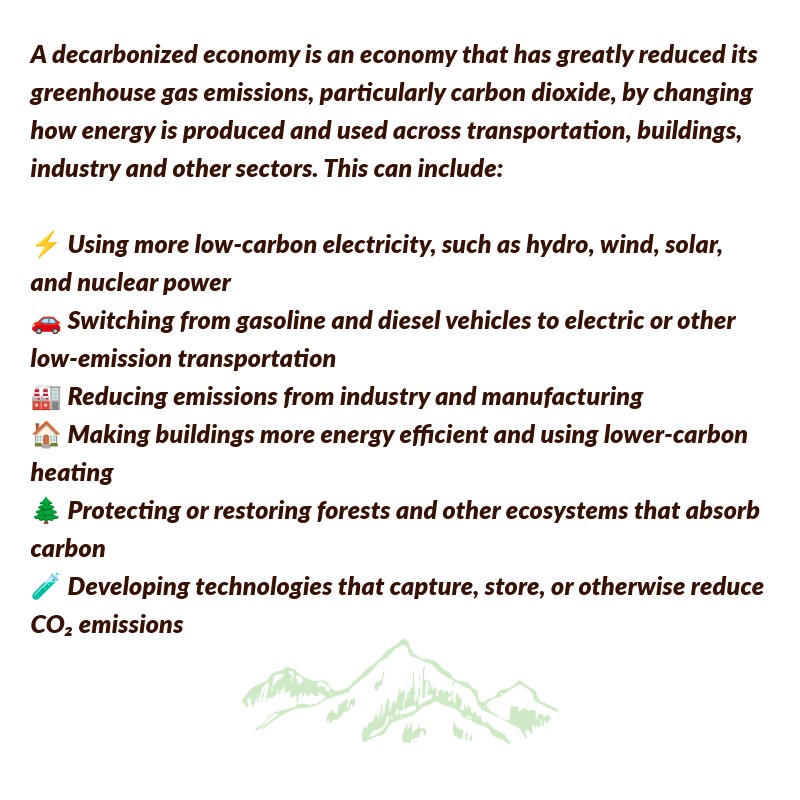
The federal government, as it likes to say, is working to meet the world where it’s at. Right now, the world has badly missed all of its climate goals, raising the likelihood that the world will warm beyond what’s sustainable. Given that, the government is increasingly emphasizing mitigation over prevention, while balancing investments in traditional and non-traditional energy. In other words, build for a greener future, but prepare for a changing world that still consumes oil.
But the government is also making another bet: Canada alone can’t solve climate change, but it can play a leadership role in safeguarding biodiversity – arguably a more urgent environmental goal. To that end, Ottawa backed the 30-by-30 nature goal (to protect 30% of Canada by 2030), ratified the High Seas Treaty (to help advance global ocean conservation), and announced $82-million for ocean monitoring (to help offset environmental impact associated with increased tanker traffic on the West Coast).
A final thought
What’s been overlooked is that by agreeing to a new pipeline to BC’s Lower Mainland, the government chose to keep the North Coast tanker ban in place. If there was ever a political environment to revisit this particular piece of controversial legislation, this was the moment. By choosing not to pursue this path, the de facto national energy corridor created with this pipeline – combined with the sheer cost of building a new pipeline – all but guarantees that the North Coast (known by many as the Great Bear Rainforest) will remain in its largely pristine state. This increasingly matters.
In a world of rapid change, where key countries like Russia, Brazil, and the Congo are in deep turmoil, there are fewer and fewer intact and interconnected bulwarks for protecting biodiversity. By choosing not to risk an oil spill on the North Coast, alongside BC’s major conservation investments, the federal government has, in a roundabout way, secured the long-term protection of a globally important biodiversity reservoir.
Is this the vaunted Canadian compromise? Is this the right balance in a time of crisis? Does it go too far for nature – or not far enough? These are the questions.
Referenced Resources
- New West Coast pipeline expected to be designated project of national interest by Thursday
- West Coast Oil Pipeline – Major Projects Office
- Inside the agency advancing Carney’s major projects agenda
- Ottawa pledges $1.2-billion for ocean protection, days ahead of decision on West Coast pipeline
- What to know about Carney’s ‘nation-building’ projects announced so far
- LNG Canada partners expected to green-light multibillion dollar expansion
- N.L. government votes to endorse Quebec energy proposal
- Proposed B.C. pipeline terminus, port expansion referred to Major Projects Office
- Ottawa Commits $1.2 Billion to Marine Protection as West Coast Trade and Energy Traffic Grows