17%
Complete

Chapter Three

We Don’t Know What We Don’t Know

Part One

IN THIS CASE, YOU KNOW YOU KNOW YOU HAVE TO WATCH THIS STORY about what we don't know we don't know, you know?

Read Story Instead

Prefer reading instead? Here's the text version of your lesson.

Questions & Activities

Reflect on your lesson with short activities, or by exploring referenced articles, featured podcasts, term definitions, and more!

Featured Hot Take

How to learn what we don’t know we don’t know? Listen to different perspectives and experiences!

Dr. Leroy Little Bear is recognized globally as a leader on Indigenous education, rights, self-governance, language and culture. Really listen to Leroy’s story and reflect on what you hear. What did you know? What did you learn? And on both counts, why was that the case?

We’re featuring this podcast across all five Nature Labs subjects. You might not like every course you take in school, but they are all related. By listening to this podcast, hopefully you’ll better understand why.

Reflection

  • How can we ask better scientific questions that lead to rigorously tested solutions to societal challenges?
  • By asking better questions, will we be able to dig deeper on the issues we face and understand a more complete version of the truth? Is this our best tool for understanding what we don't know we don't know?
  • Can the principals of traditional knowledge help us ask the better scientific questions?
  • Do we need to weave culture into our scientific equations to find the better answers?
  • Do we do a good enough job of understanding how different cultures view different issues, well, differently?

Did this story leave you with a question? 

The best questions will be answered by Environment and Climate Change Canada’s scientists on video just for you! Make sure you include your name and school.

Part Two

THE FOLLOWING ACTIVITIES WILL HELP YOU BETTER UNDERSTAND THE CONCEPTS YOU NEED TO LEARN IN THIS CLASS. YOUR TEACHER WILL SELECT WHICH ACTIVITIES YOU NEED TO COMPLETE BELOW.

Skills Quiz

What are you good at and what do you love? How can you use your skills and passion to help you in this class and in life? Take the (fun, non-consequential) quiz to find out!

Solving the Riddle

Here's the riddle: how to learn what you don't know you don't know? Where do you even start? We're here to help! Find out what to do when you don't know what to do.

Bridge the Gap

Now that you've got the tools, it's time to fill the gaps in your knowledge. Explore your questions and find answers that lead to your one better question. * Recommended

Go Deeper

What are dominant and recessive traits? Why do some species reproduce more easily than others? Test your knowledge!

Asexual Reproduction Lab

How does pollination lead to reproduction in plants? This is cool! Learn from the teachings of biologist Verne Lehmberg.

Plant & Flower Anatomy Lab

How do you identify different genetic qualities in plants and flowers? Learn from the teachings of biologist Verne Lehmberg.

Part Three

HOW DOES THIS CLASS RELATE TO REAL-WORLD ISSUES?

Inquiry Media

Does one individual matter?

Canada at a Crossroads

NEW: Inquiry Media Series

This five-part story will be featured across each of the first five chapters of Nature Labs and will ask students to explore the question of how Canada can protect our economy and sovereignty while still addressing the other challenges of our time.

Further Exploration

Latest News

Iran War Briefing

The Iran war, which started February 28th with US-Israeli strikes that killed Iran's Supreme Leader amid nuclear and missile tensions, is a high stakes...

How Floor Crossings Might Impact Canadian Politics

As we’ve discussed previously in Nature Labs, floor crossing involves Members of Parliament switching party allegiance mid-term, shaking up government stability. And in recent...

International Women’s Day

Happy International Women's Day! Today is a day to recognize the strength, resilience, intelligence, and leadership of women around the world. From classrooms to communities, from science...

Resources From the Curated Library
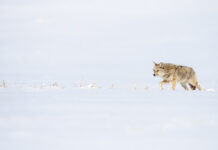
The History of Coyotes

The History of Coyotes Bias: Centre Sub-Category: Reproduction Source: History of Coyotes File Type: Book Overview: History of coyotes Web...
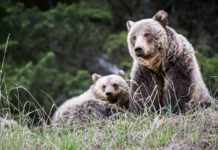
A Strange New Gene Pool of Animals Is Brewing in the Arctic

Bias: None Sub-Category: Genetics Source: Nautilus File Type: Essay/Analysis Overview: A new gene pool in the arctic is...
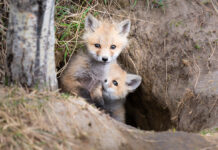
How Diverse Personalities Help Animals Survive

Bias: None Sub-Category: Interesting Source: National Geographic File Type: Article Overview: Animal personalities help them survive Web Link: https://news.nationalgeographic.com/2018/01/animal-personalities-mousy-cats-sheepish-coyotes-shivik/
How animals are adapting to cope with their noisiest neighbours – humans

Bias: Centre Sub-Category: Adaptation Source: The Conversation File Type: Essay Overview: How animals adapt to humans Web Link: https://theconversation.com/how-animals-are-adapting-to-cope-with-their-noisiest-neighbours-humans-66166
Diversity-dependent speciation and extinction in hominins

Bias: none Source: Nature File Type: Journal Overview: Diversity-dependent speciation and extinction in hominins Web Link: https://www.nature.com/articles/s41559-024-02390-z

Reproduction & Genetics

Better understand the core concepts of this lesson and then test your knowledge below. Genetics and ReproductionDownload Select an animal that exists in your community, or...

Additional Resources

25%
Unit completion

Chapters

Chapter One

The System of Things

Chapter Five

Here’s How

Chapter Nine

Own Your Hypocrisy

Chapter Two

The Context of It All

Chapter Six

Your Turn

Chapter Ten

Keep Going

Chapter Three

We Don’t Know What We Don’t Know

Chapter Seven

Dig Deeper

Chapter Eleven

One Last Thing

Chapter Four

Hard Stuff is Hard

Chapter Eight

Be Better

Chapter Twelve

The End (of the Beginning)